


I approached Natural Cycles as a health app rather than as a typical period calendar. Its purpose is more demanding: it helps users interpret fertility patterns for birth control or pregnancy planning, so the quality of the experience depends not only on the interface but also on consistent daily use and careful attention to the guidance it provides. That makes it a very different proposition from an app that simply predicts when a period might arrive.
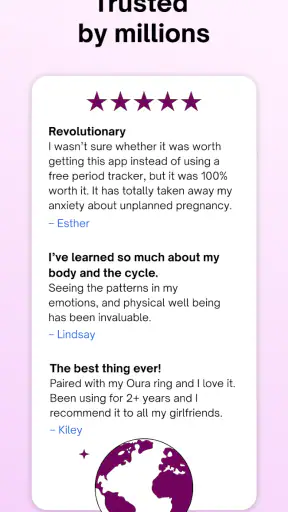
Developed by Natural Cycles AG, this medical app is available free of charge and has reached over a million installs. It carries a mature audience rating of 17+, which feels appropriate for an app dealing with contraception, fertility and pregnancy. Its current version is 5.8.4, and it requires at least iOS or Android 12. The app has an average rating of 4.4 from around 23 thousand ratings, with roughly 1.6 thousand written reviews, so it has clearly attracted a substantial user base while still leaving room for individual experiences to vary.
How Natural Cycles works in everyday life
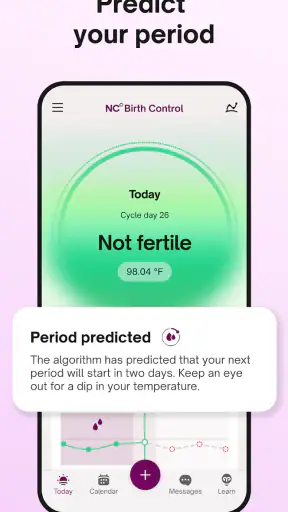
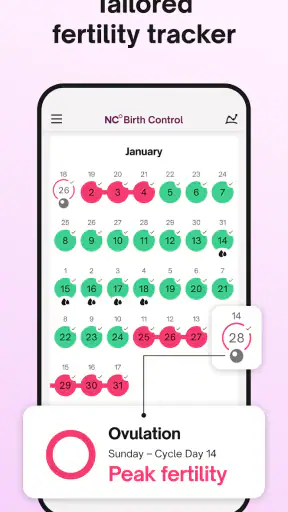
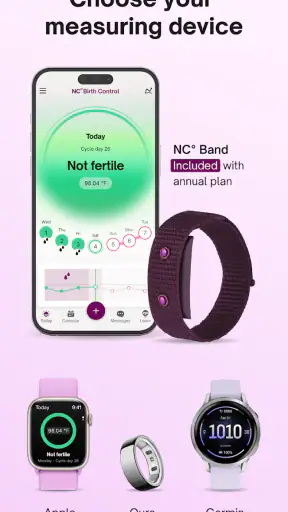
The central idea is straightforward, but using it well requires more involvement than opening a calendar once a month. You record relevant cycle information, follow the app’s daily instructions, and use its interpretation of your fertile and non-fertile days to support either contraception or conception. That routine is the real product. The calendar is only the visible part.
What I appreciate is that the app encourages a more deliberate relationship with fertility data. Instead of treating an average cycle as a fixed schedule, it asks you to pay attention to your own pattern. That is important because real cycles do not always behave like a neat textbook example. Travel, illness, disrupted sleep and other changes can make a purely calendar-based approach feel falsely precise.
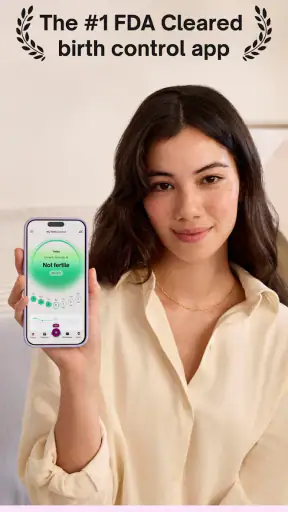
The store summary describes it as the only FDA-cleared fertility and ovulation tracker for birth control and pregnancy. I would still treat that wording as a reason to understand the app carefully, not as permission to use it casually. Clearance does not remove the need to follow the method correctly, and no fertility app should be treated as a guarantee. The app can support decisions, but the user remains responsible for applying its guidance consistently.
The daily habit matters more than the attractive interface
The most realistic way to use Natural Cycles is to attach it to a habit you already have. For example, someone might make the daily measurement and entry part of their morning routine, before getting out of bed or checking messages. The exact routine will depend on the method and instructions shown in the app, but the broader lesson is the same: missed or irregular entries can make the experience less useful and more frustrating.
This is one of the less obvious trade-offs. A conventional period tracker can still show a predicted calendar when you forget to log for a while. A fertility-focused system has more reason to be cautious when information is incomplete. That may mean the app feels less convenient precisely when your schedule is chaotic, even though those are the moments when a simple calendar can be most tempting.
I also found that the value comes from looking at trends rather than reacting to one isolated day. A single unusual result should not become a source of panic or an excuse to ignore the broader pattern. Users who are willing to review their history, notice changes and follow the app’s instructions will get far more from it than users who only want a quick “safe” or “unsafe” label.
What the free access means for value
Natural Cycles is listed as free, which removes the first barrier for someone who wants to explore the app before deciding whether it fits their life. That is useful because this is not a product I would recommend choosing solely from a screenshot or a short description. The daily workflow, the amount of attention it demands and the way it communicates fertile days are personal matters.
At the same time, free access should not automatically be confused with complete value for every user. The important question is whether the app’s approach suits your contraceptive or pregnancy-planning needs. If you are not prepared to make regular entries and follow the method’s guidance, the fact that you can start without paying does not make it a good choice. A free app that you abandon after a week is less valuable than a paid method you can use reliably, although Natural Cycles has the advantage of letting you assess the routine without an upfront purchase.
I would also separate the app itself from any surrounding healthcare decisions. The free price makes it easier to investigate the experience, but it does not replace conversations with a qualified healthcare professional when you have irregular cycles, concerns about fertility, are changing contraception, or need advice tailored to a medical condition. The app can organize information; it cannot examine you or understand your complete medical history.
Where it is stronger than a basic period calendar
A standard period tracker is often excellent for recording bleeding, estimating the next period and spotting broad patterns. That is enough for many people. Natural Cycles aims at a more specific problem: using fertility awareness for birth control or pregnancy. Its strength is therefore not simply a prettier calendar. It is the attempt to turn repeated observations into guidance that is relevant to fertility decisions.
That distinction matters when choosing between apps. If you mainly want reminders about an upcoming period, Natural Cycles may feel too serious and involved. If you want to understand when conception is more likely, or you prefer a fertility-awareness approach to contraception, a general calendar may feel too shallow. In that situation, the specialized focus is the reason to choose it.
There is also a practical advantage in keeping cycle-related information in one dedicated place rather than combining scattered notes, a paper calendar and a general wellness app. A single record is easier to review when you are trying to understand whether a change is occasional or recurring. Still, I would not mistake organization for diagnosis. Patterns can be useful to discuss with a clinician, but they are not automatically explanations.
Trade-offs that deserve serious attention
The biggest limitation is the commitment required. Fertility awareness works poorly as a “use it when convenient” system. A person with rotating shifts, frequent travel, unpredictable sleep or a habit of forgetting morning routines may find the process difficult. That does not mean the app is badly designed; it means the method demands a level of consistency that some lifestyles make harder.
Another trade-off is emotional. When an app is used for contraception, uncertainty can feel much more consequential than it does in a period calendar. A cautious instruction may be reassuring to one person and frustrating to another. Someone who wants a method that does not require daily interpretation may be better served by discussing other contraceptive options with a healthcare professional.
I would also be careful about assuming that a fertility tracker is suitable for every reproductive situation. If your cycles are highly irregular, you are postpartum, approaching menopause, taking medication that affects cycles, or dealing with a condition that changes bleeding or ovulation, you should seek professional advice about whether this approach is appropriate for you. The app’s specialized purpose does not mean it can automatically adapt to every medical circumstance.
Privacy is another subject I would consider before entering intimate health information into any app. I am not making a claim here about specific policies or permissions; rather, I recommend reading the current privacy information yourself and deciding whether you are comfortable with the way the service handles sensitive data. That is sensible for any fertility or pregnancy app, especially one that may become a long-term record of your reproductive health.
A realistic scenario: planning around an ordinary busy week
Imagine a user who works from home, usually wakes at a similar time and wants to avoid hormonal contraception. They can build the app into a morning routine, enter the requested information, check the day’s guidance and plan accordingly. For that person, the app’s structure may provide a clearer framework than guessing from an average cycle.
Now change the circumstances. The same user spends a week traveling, sleeps at different times, becomes ill and forgets several entries. The app may then feel less convenient than expected, because the user cannot simply assume that the previous pattern remains reliable. The correct response is not to improvise or treat an old prediction as certainty. It is to follow the current guidance, use additional protection when appropriate and ask a healthcare professional if the situation is confusing or medically concerning.
This example captures my overall view: Natural Cycles can reward discipline, but it does not remove responsibility. Its value is highest when the user wants an active method and is ready to participate in it every day. It is weaker for anyone hoping technology will make fertility decisions effortless.
Who is likely to get the most value
I think the app is best suited to adults who want a fertility-focused tool rather than a general period diary. It may appeal to someone preparing for pregnancy, someone trying to understand ovulation patterns, or someone exploring fertility awareness for birth control and willing to follow the method carefully.
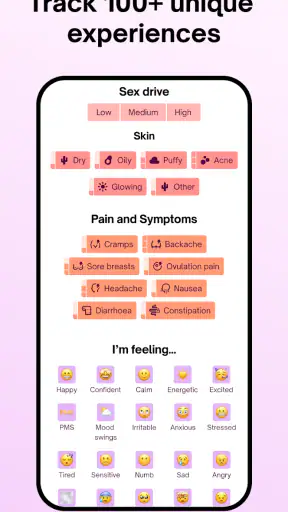
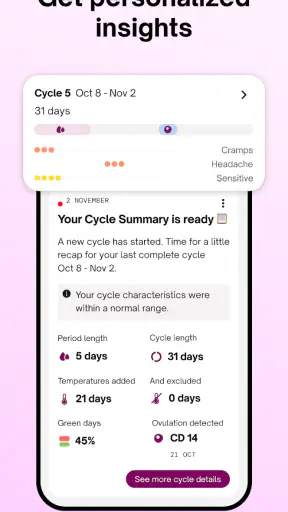
It can also be useful for people who like reviewing personal trends. The ability to look back at recorded information may help you prepare more focused questions for a healthcare appointment. Instead of saying that your cycle “feels different,” you may be able to describe when changes appeared and how often they occurred. That does not turn the app into a diagnostic service, but it can make conversations more concrete.
I would be more cautious about recommending it to a person who wants a completely passive solution, dislikes daily tracking, or needs contraception with the lowest possible user involvement. I would also hesitate if the person is likely to ignore guidance on uncertain days because it conflicts with plans. In those cases, another contraceptive approach may offer a better balance of reliability, convenience and peace of mind.
Questions I would ask before installing it
The first question is whether you want fertility awareness or merely period prediction. If your goal is only to know when bleeding may begin, a simpler tracker could be easier and less demanding. If your goal involves contraception or pregnancy, the specialized design becomes more relevant, but so does the need to understand the method rather than relying on colorful calendar markings.
The second question is whether you can maintain a dependable routine. Think about your real mornings, not your ideal ones. If you regularly wake at different times, travel or forget health tasks, consider how you will handle those interruptions before making the app part of an important contraceptive plan.
The third question is what you will do when the app gives guidance you do not like. A responsible user needs a backup plan for uncertain or fertile days. That might mean using another form of protection or pausing a decision until the situation is clear. The app is not at its best when users treat inconvenient information as optional.
Finally, ask whether your current health situation calls for professional input. Fertility tracking can be informative, but it should not delay medical care or replace individualized advice. If you are worried about fertility, cycle changes or pregnancy, use the records as a starting point for a conversation rather than as a final answer.
My final recommendation
Natural Cycles is a focused medical app with a clear audience and a meaningful daily commitment. I like that it is aimed at fertility decisions instead of pretending that every user only needs a generic period prediction. The free price makes it practical to try, and the large user base suggests that the approach resonates with many people. Its 17+ rating also sets the right expectation that this is an adult health tool, not a casual lifestyle calendar.
My recommendation is positive, but conditional. Choose it if you want an active fertility-awareness routine and are prepared to follow it consistently. Do not choose it simply because it is free or because an app seems easier than learning how your cycle works. The strongest results will come from users who treat the guidance seriously, keep their records current and know when to seek outside advice.
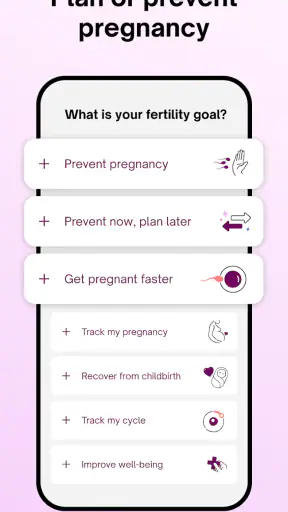
For pregnancy planning, it can offer a structured way to observe fertility-related patterns. For birth control, I would be especially strict about consistency and backup protection on days when the guidance calls for caution. If you want minimal effort, have a complicated reproductive-health situation or feel uncomfortable making daily decisions around fertility, another option may suit you better.
Overall, I see Natural Cycles as worthwhile for the right person, not as a universal replacement for every contraceptive or period-tracking method. Its strongest feature is the combination of specialized purpose and personal tracking; its main weakness is that the user has to do the work. If that exchange feels fair to you, the app is worth exploring. If it feels burdensome from the beginning, the free download will not change that fundamental trade-off.


